
Global funds have pulled out Rs 1.54 trillion from domestic stocks in fiscal 2024 - 25 (FY25), the highest-ever outflow recorded so far, according to the data compiled by Business Standard. The last time the global funds exited Indian shores in droves was back in 2022, when they sold a net Rs 1.41 in the backdrop of Covid-19.

Disappointing quarterly earnings numbers and revenue forecast from IT services company Wipro also weighed on investor sentiments. The 30-share BSE Sensex fell 247.78 points or 0.38 per cent to settle at 65,629.24 points. During the day, it plunged 533.52 points or 0.80 per cent to 65,343.50 points.

From the Sensex pack, JSW Steel, Tata Steel, NTPC and UltraTech Cement emerged as major winners, closing the day with a gain of up to 3.33 per cent. On the other hand, Asian Paints, ITC, L&T and SBI were the laggards, ending the session up to 3.95 per cent lower. Of the 30 Sensex stocks, 14 closed the day in green, while on the 50-stock index Nifty 25 scrips ended with gains.

Equity benchmark Sensex and Nifty ended marginally down on Tuesday tracking losses in metal, banking and financial stocks. Investors also remained concerned over persistent foreign fund outflows, traders said. Falling for the fifth consecutive session, the 30-share BSE index ended 37.70 points or 0.07 per cent lower at 57,107.52. Similarly, the NSE Nifty shed 8.90 points or 0.05 per cent to close at 17,007.40.

Benchmark indices fell sharply on Monday, with the Sensex and Nifty tumbling nearly 2 per cent each amid weak global market trends and foreign fund outflows. Falling for the fourth straight day, the 30-share BSE Sensex tanked 953.70 points or 1.64 per cent to settle at 57,145.22. During the day, it plummeted 1,060.68 points or 1.82 per cent to 57,038.24.

Among the Sensex firms, Bajaj Finance jumped the most by 4.64 per cent. Bajaj Finserv, Kotak Mahindra Bank, Asian Paints, UltraTech Cement, ICICI Bank, NTPC, JSW Steel and Tata Steel were among the major gainers. Infosys, Mahindra & Mahindra, Wipro, Tata Consultancy Services, IndusInd Bank and HCL Technologies were the major laggards.

Among the Sensex firms, HDFC Bank emerged as the biggest loser, falling 4 per cent. JSW Steel, Reliance Industries, UltraTech Cement, Maruti, Tata Steel, Wipro, Tech Mahindra, Bharti Airtel and Larsen & Toubro were the other major laggards. Power Grid, Asian Paints, Sun Pharma, Axis Bank, NTPC, ITC and Infosys were among the gainers.

Sliding for the fifth straight session, the rupee fell 3 paise to close at a fresh lifetime low of 79.06 against the US dollar on Thursday amid a strong greenback overseas and unrelenting foreign fund outflows. At the interbank forex market, the local unit opened at 78.92 against the greenback and witnessed an intra-day high of 78.90 and a low of 79.07. It finally settled at 79.06, down 3 paise over its previous close of 79.03.
Benchmark stock indices Sensex and Nifty closed with losses in a choppy trade on Thursday as investors preferred a cautious approach ahead of inflation and industrial production data to be released later in the day. Unabated foreign fund outflows also hit the investor sentiment. The 30-share BSE Sensex declined by 147.47 points or 0.25 per cent to settle at 59,958.03.

By taking the mutual fund route, investors can take exposure to gilts with small amounts. Over a decade or more, returns from these funds tend to be sound.

Equity benchmark indices Sensex and Nifty settled lower for the sixth straight session on Monday due to heavy selling in bellwether stocks including HDFC Bank and Reliance Industries amid mixed trends in the global markets and outflow of foreign funds. Falling for the sixth consecutive session, the BSE Sensex tumbled 638.45 points or 0.78 per cent to settle at 81,050. During the day, it plummeted 962.39 points or 1.17 per cent to 80,726.06. The NSE Nifty slumped 218.85 points or 0.87 per cent to end at 24,795.75.

Tata Steel, Tech Mahindra, NTPC, JSW Steel, Power Grid, UltraTech Cement, HCL Technologies and HDFC Bank were among the major gainers. Bharti Airtel, Hindustan Unilever, Axis Bank, Reliance Industries, Kotak Mahindra Bank, ICICI Bank and IndusInd Bank were among the laggards.
Benchmark BSE Sensex and NSE Nifty closed marginally down in a volatile trade on Wednesday due to profit taking by investors after two straight days of gains amid mixed global trends and foreign fund outflows. The 30-share Sensex dipped 17.15 points or 0.03 per cent to settle at 60,910.28. During the day, it declined 213.66 points or 0.35 per cent to 60,713.77.

Foreign fund outflows and a lower opening in the domestic equity market, restricted rupee's gain.
In the Sensex pack, Asian Paints, Larsen & Toubro, Titan, IndusInd Bank, Bharti Airtel, Power Grid, Bajaj Finserv, Infosys, HDFC Bank and HDFC were the major laggards. On the other hand, Axis Bank, Tata Motors, ITC, State Bank of India, Tata Steel and Sun Pharma were among the gainers.

Benchmark indices faced severe drubbing on Friday, with the Sensex and Nifty falling nearly 2 per cent each amid feeble global market trends. Foreign fund outflows and fears of recession in the global economy have dented investor sentiments. Falling for the third day in a row, the 30-share BSE Sensex tanked 1,093.22 points or 1.82 per cent to settle at 58,840.79.

The rupee fell by 49 paise to close at 81.89 (provisional) against the US dollar on Monday as heavy selling pressure in the domestic equities and a spike in crude oil prices weighed on the local unit.

From the Sensex pack, Maruti, Axis Bank, Tata Consultancy Services, Nestle, Infosys, Mahindra & Mahindra, Tech Mahindra and Bharti Airtel were the major laggards. Power Grid, Sun Pharma, HCL Technologies, Larsen & Toubro and UltraTech Cement were the gainers.

Bajaj Finserv, ICICI Bank, Nestle, UltraTech Cement, Bajaj Finance, Maruti, Tata Consultancy Services, IndusInd Bank and State Bank of India were the major laggards. Infosys, JSW Steel, NTPC and Power Grid were the gainers.
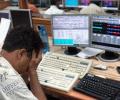
From the Sensex pack, Tata Steel declined 3.45 per cent, followed by Tata Motors which fell by 3.19 per cent. Bajaj Finserv, NTPC, JSW Steel, State Bank of India, Larsen & Toubro and Bharti Airtel were among the other major laggards. Nestle, Asian Paints, Hindustan Unilever and Tech Mahindra were the gainers.
Benchmark equity indices Sensex and Nifty slumped over 1 per cent on Friday, tracking a weak trend in global markets and fresh foreign fund outflows. Falling for the third day running, the 30-share BSE Sensex tumbled 1,017.23 points or 1.24 per cent to settle at 81,183.93.

Even as Foreign Institutional Investors (FIIs) have been selling across markets and pulling out money, their outflow was highest from India in 2011, compared with BRIC peers (Brazil, Russia, India and China) and other emerging markets.

Dalal Street had a roller coaster ride in 2024 from shattering record after record to facing heavy correction off-late but equity markets still rewarded investors with positive returns, driven by a surge in domestic fund flows and a resilient macro landscape. The first half of the year saw robust corporate earnings, a surge in domestic flows, and a resilient macro landscape, driving the Nifty to an all-time high of 26,277.35 in September 2024, according to Motilal Oswal Wealth Management.

'From a risk-return perspective, large-cap funds may generate lower-than-historical average returns in 2024, whereas mid-, and small-cap funds hardly have any upside left.'
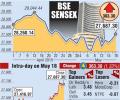
The 30-share Sensex ended 363 points higher at 27,687.
From the Sensex pack, Bharti Airtel, State Bank of India, HDFC Bank, UltraTech Cement, Bajaj Finance, HDFC, NTPC, ITC, Reliance Industries, Tech Mahindra, ICICI Bank and Tata Consultancy Services were the major laggards. Tata Motors, Power Grid, Tata Steel, Hindustan Unilever, IndusInd Bank and Mahindra & Mahindra were among the winners from the 30-share pack.

Foreign investors continue to pull back money from the Indian equity market, withdrawing Rs 24,753 crore (about $2.8 billion) in the first week of March amid escalating global trade tensions and lacklustre corporate earnings.

The Reserve Bank of India (RBI) has extended the trading hours for the interbank call money market from July 1, and that of repo and tri-party repo markets from August 1. Market participants said the decision is intended to help reduce the large Standing Deposit Facility (SDF) balances held by banks with the RBI, thereby addressing liquidity mismatches.

Market watchers link the pullback to underwhelming listing-day performance and the lack of big-name IPOs.
Among the Sensex firms, Power Grid, UltraTech Cement, Titan, Reliance Industries, Bajaj Finance, Mahindra & Mahindra, ICICI Bank, Tata Consultancy Services, Tech Mahindra, ITC and HDFC Bank were the major laggards. HCL Technologies, IndusInd Bank, Wipro, Nestle, Maruti, Larsen & Toubro and Asian Paints were among the gainers.

Top losers in the Sensex pack included TCS, Yes Bank, ITC, Sun Pharma, Reliance, Coal India, Asian Paints, SBI, Maruti, HUL, HCL Tech and ICICI Bank, falling up to 2.91 per cent.

Domestic institutional investors (DIIs), mostly mutual funds and insurance companies, overtook foreign portfolio investors (FPIs) in ownership of NSE-listed companies in the March quarter of 2025. According to Prime Database, DIIs held a 17.62 per cent stake, up from 16.89 per cent in the December 2024 quarter.

Equity investors became poorer by over Rs 5 lakh crore in early trade on Thursday as domestic benchmark indices tumbled mirroring weak trends in global equities. The 30-share BSE benchmark Sensex tanked 1,154.78 points to 53,053.75 in early deals tracking weak global markets, persistent foreign fund outflows and a spurt in crude oil prices. The weak broader market trend pulled down the market capitalisation of BSE-listed firms by Rs 5,02,731.03 crore to Rs 2,50,74,714.78 crore in early trade.
Bajaj Finserv was the biggest loser among the Sensex constituents, sliding 3.81 per cent, followed by Bajaj Finance, Tata Steel, Reliance Industries, HCL Tech, SBI, Larsen & Toubro and Mahindra & Mahindra, Axis Bank and Titan. On the other hand, Kotak Mahindra Bank, Infosys, Tech Mahindra, Power Grid, Asian Paints and Wipro were the gainers.

Equity benchmarks declined on Thursday after a two-day rally, mirroring a weak trend in the US markets and fresh foreign fund outflows. Weak US consumer data and hawkish comments from the Fed's policymakers dragged markets lower. The 30-share BSE Sensex dropped 187.31 points or 0.31 per cent to settle at 60,858.43.

From the Sensex pack, Power Grid, Mahindra & Mahindra, JSW Steel, HCL Technologies, Sun Pharma, Nestle, IndusInd Bank, Reliance Industries, Bharti Airtel and ITC were the major laggards. Tech Mahindra, Wipro, Bajaj Finance, State Bank of India, Bajaj Finserv, Axis Bank, Titan and ICICI Bank were among the major gainers.
The rupee depreciated 7 paise to an all-time low of 80.05 against the US dollar in early trade on Tuesday tracking the strength of the American currency and firm crude oil prices. At the interbank foreign exchange, the rupee opened at 80 against the American dollar, then lost ground to quote at 80.05, registering a fall of 7 paise from the last close. In initial trade, the local unit also touched 79.90 against the American currency.

Bajaj Finance led the Sensex gainers' chart, spurting up to 2.38 per cent, followed by Bajaj Finserve rising 2.11 per cent and IndusInd Bank closing 1.66 per cent higher. Bharti Airtel, SBI and L&T increased by 1.60 per cent, 1.28 per cent and 0.92 per cent, respectively.

In the Sensex pack, Mahindra & Mahindra, Tata Steel, Tata Motors, Maruti, Larsen & Toubro, HDFC, HDFC Bank, Tech Mahindra and Bharti Airtel were the major laggards. Asian Paints, Bajaj Finserv, Power Grid, Reliance Industries, NTPC and UltraTech Cement were among the gainers.
The rupee gained 11 paise to 82.68 against the US dollar in early trade on Tuesday as the American currency retreated from its elevated levels. Forex traders said sustained foreign fund outflows weighed on the local unit and restricted the appreciation bias. At the interbank foreign exchange, the domestic unit opened at 82.69 against the dollar and marginally rose to 82.68, registering a rise of 11 paise over its previous close amid a positive trend in domestic equities.
